
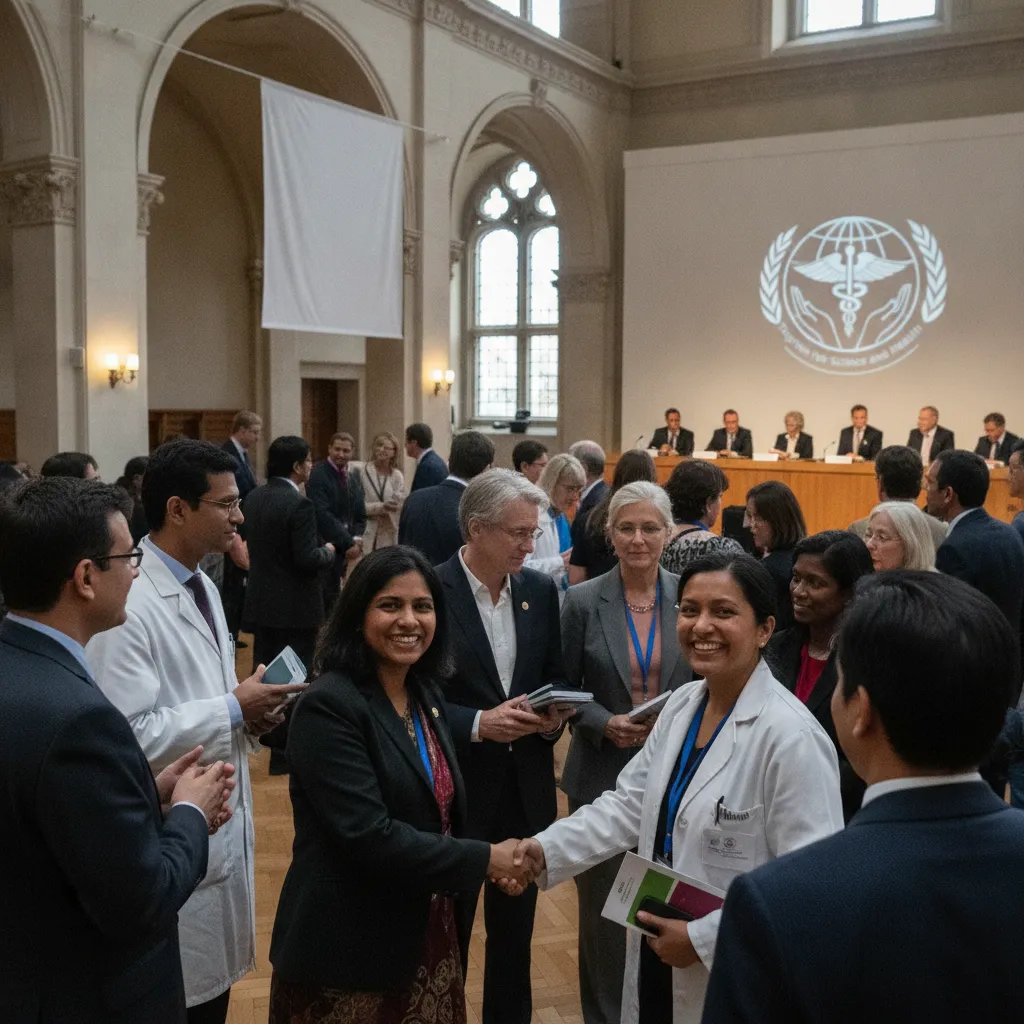
In a sweeping effort to combat skepticism and modernize how medical breakthroughs reach the public, the World Health Organization has unveiled a massive new initiative called Together for Science and Health. Launched on World Science Day for Peace and Development, the movement brings together over 240 organizations ranging from government bodies to research institutions. By aligning with the Paris Peace Forum, the project emphasizes a diplomatic approach to health, aiming to turn scientific discovery into a universal tool for social stability rather than a source of division.
Director-General Dr. Tedros Adhanom Ghebreyesus, joined by French President Emmanuel Macron, framed the launch as a necessary step in safeguarding humanity’s future. Dr. Tedros noted that while science has historically provided the vaccines and medicines that allow people to live longer lives, those advancements only work when there is widespread confidence in them. He argued that evidence and innovation must serve as the bedrock of any healthy society, suggesting that technical success means little without public buy-in.
The movement focuses on three primary goals: closing the distance between researchers and the general population, ensuring policymakers rely on hard data rather than political convenience, and refining how complex scientific ideas are communicated to avoid confusion. This comes at a critical time when artificial intelligence and rapid digital shifts are changing how people consume health information, often blurring the line between verified facts and misinformation.
Dr. Sylvie Briand, WHO Chief Scientist, emphasized that building trust cannot be done in isolation by any single country or agency. She described science as a shared global resource meant to create fairer and more resilient communities through dialogue rather than polarization. As part of this broader strategy, the WHO is calling on additional institutions worldwide to lend their expertise toward a future where trusted evidence consistently translates into better healthcare outcomes for everyone regardless of geography.