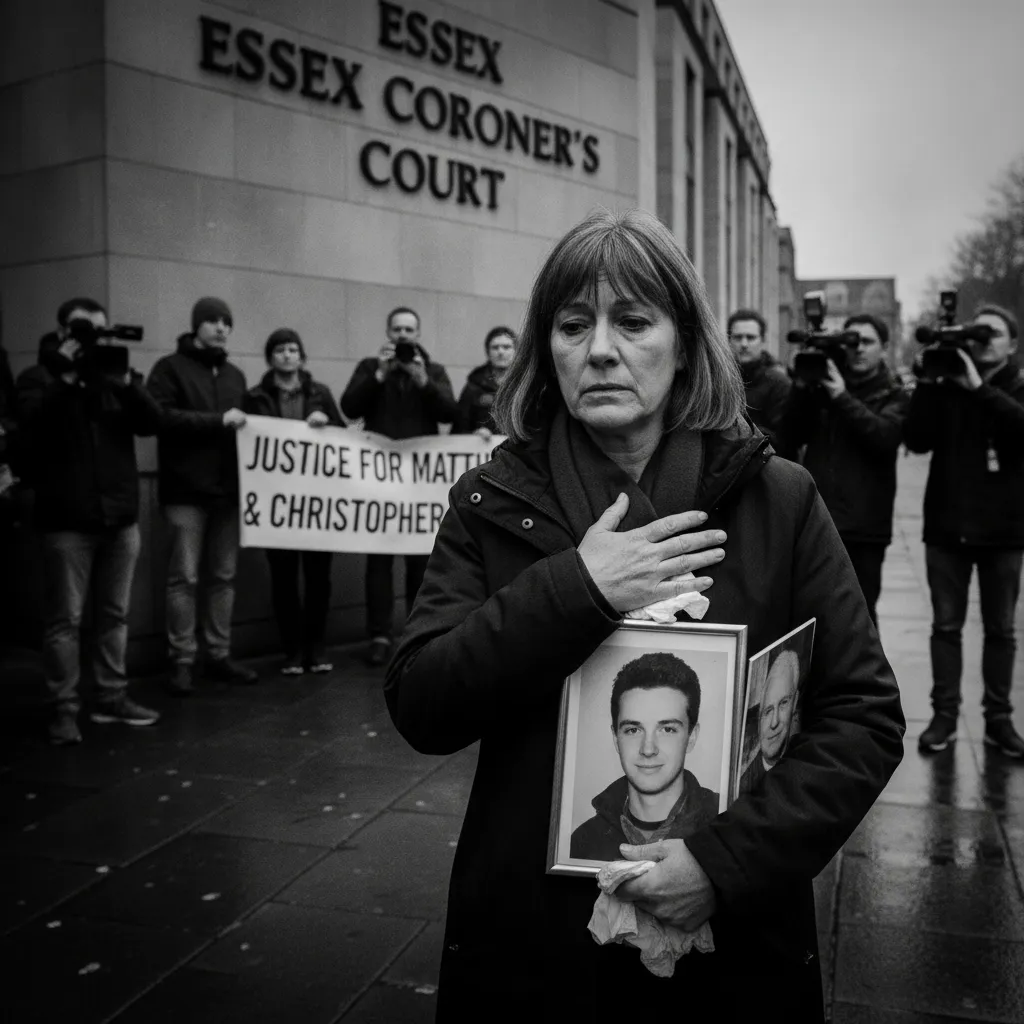
Melanie Leahy describes her life as destroyed after losing both her son and her partner to catastrophic failures within the Essex mental health system. Speaking outside the Essex Coroner’s Court, she expressed a profound sense of betrayal, stating that her family has been effectively wiped out by negligence. The tragedy began with the death of her son, Matthew Leahy, while he was an inpatient at the Linden Centre in Chelmsford back in 2012, marking the start of a long and painful battle for accountability.
The grief deepened recently with the death of her partner, Colin Flatt, a former professional footballer known for his athletic career at clubs like Leyton Orient and Southend United. Once fit and active, Mr. Flatt suffered a decline in health leading to an Alzheimer’s diagnosis and detention under the Mental Health Act. An inquest heard that opportunities to save him were missed, specifically regarding his premature discharge from Goodmayes Hospital and subsequent failures during his admission to Basildon Hospital. These lapses culminated in a tragic incident where Mr. Flatt died after falling onto a glass table following a period of severe distress.
During the proceedings, jurors highlighted several critical errors, including a lack of referral to specialists and poor communication during hospital handovers. Ms. Leahy spoke candidly about how Colin was terrified and confused toward the end, arguing that he ceased to be treated as a human being by those tasked with his care. She dismissed corporate apologies and promises of lessons learned, insisting instead on personal responsibility for the systemic collapses that claimed two members of her household.
Now acting as a fierce campaigner, Ms. Leahy views the ongoing Lampard Inquiry as her final hope for genuine justice. She believes continuing the fight is an obligation to both Matthew and Colin, ensuring that no other families endure similar devastation. Meanwhile, representatives from the NHS trusts involved stated they are taking note of the coroner’s findings as part of a wider examination into more than 2,000 deaths occurring under mental health services in Essex over twenty years.